1960 Chevrolet CERV I
- Engine
- 377 cu in (approx. 6.2L) OHV aluminum V8, Hilborn fuel-injected, Alcoa-cast
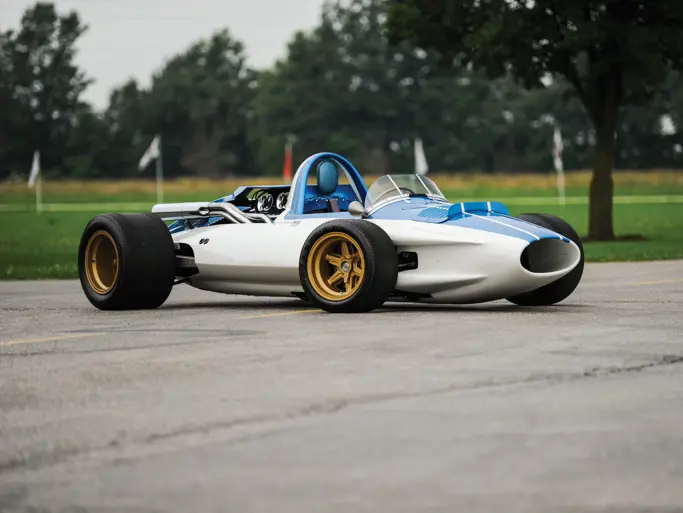
The Chevrolet Engineering Research Vehicle I (CERV I) is a unique, single-seat experimental racing prototype conceived by Zora Arkus-Duntov and constructed in 1960 on a lightweight chromium-molybdenum tubular spaceframe, bodied in fiberglass by Larry Shinoda and Tony Lapine. Driven publicly by Dan Gurney and Stirling Moss at Riverside in 1960, it achieved 206 mph at the GM Milford Proving Grounds in 1964 with its seventh and final engine, a Hilborn-injected Alcoa-cast 377 cu. in. aluminium V-8. Preserved from destruction by Arkus-Duntov himself, the car passed to Briggs Cunningham's museum and later to Miles Collier before entering its current private collection.
Ownership
- —Auction saleEstimate US$1,300,000 – US$2,000,000
- 1960 → 1972Factory deliveryGeneral Motorspartial documentation
Built by Chevrolet engineering under Arkus-Duntov; used extensively as an experimental and development vehicle before being restored to its final 1964 configuration.
- 1972 → 1986Private saleBriggs Cunningham Automobile Museumpartial documentation
GM donated the car along with CERV II to Cunningham's museum in Costa Mesa, California, intending it to remain in institutional care indefinitely.
- 1986 →Private saleMiles Collierpartial documentation
Acquired as part of a bulk purchase of most of the Cunningham collection at the end of 1986; both CERVs were included in this transaction.
- Date unknownPrivate saleCurrent private collectorpartial documentation
Purchased from Miles Collier and kept in a personal museum alongside other significant Corvettes; the car has been preserved rather than altered during this period.
Competition
- 1960Riverside Raceway test sessionDriver: Zora Arkus-Duntov
Public demonstration just before the Riverside Grand Prix; Dan Gurney and Stirling Moss also drove, both recording laps around 2:04.
- 1960-09-01Pikes Peak Hill ClimbDriver: Zora Arkus-Duntov
Approximately 60 runs along a sub-mile test segment; the car was judged unsuitable for hillclimb competition in this configuration.
- 1964GM Milford Proving Grounds speed runDriver: Zora Arkus-Duntov206 mph on banked oval
Final significant outing with the Alcoa-cast 377 cu. in. V-8; this speed was not surpassed at Indianapolis until Bobby Rahal's 1986 run.
- —Daytona speed attemptDriver: Zora Arkus-Duntov162 mph top speed recorded
Attempt to claim a standing reward for lapping Daytona at 180 mph; handling issues and insufficient power prevented the target from being reached.
- —Bloomington Gold Great Hall inductionInducted to Great Hall
One of numerous awards earned during the current owner's tenure; specific year of induction not stated.
Maintenance & restoration
- 1964ModificationAlcoa
The car received its seventh engine — a Hilborn port-injected 377 cu. in. V-8 block specially cast by Alcoa at a reported cost of $284,000 — and was further revised into what became its definitive configuration.
This engine and overall specification were retained for preservation when Arkus-Duntov intervened to save the car from destruction.
- —Modification
Front bodywork was restyled by Larry Shinoda with aerodynamic revisions after the turbocharged engine caused the front wheels to lift, giving the nose a profile closer to a contemporary Formula 1 or Indianapolis car.
Change made in response to aerodynamic instability revealed during high-power testing.
- —Restoration
At Arkus-Duntov's direction, the car was restored and preserved in its final 1964 Shinoda configuration rather than being scrapped, as would have been standard GM practice for a superseded prototype.
Carried out prior to the car's transfer to the Cunningham museum in 1972.
Are you the owner of this car?
This car's public record is built from its auction and competition history. Register your ownership and privately add your own records to make it a verified Legacy Metrics passport — provenance that backs your car's value at sale and gives your insurer evidence to price against. Roy reviews and verifies every registration personally.