1965 Ford GT40 Mk II
- Engine
- 7.0L (427 cu in) V8 big-block, ~450 bhp (up to 490 bhp in later trim), dry-sump, aluminum heads
- Colour
- Gold ('Kandy Gold') with matte Day-Glo pink highlights
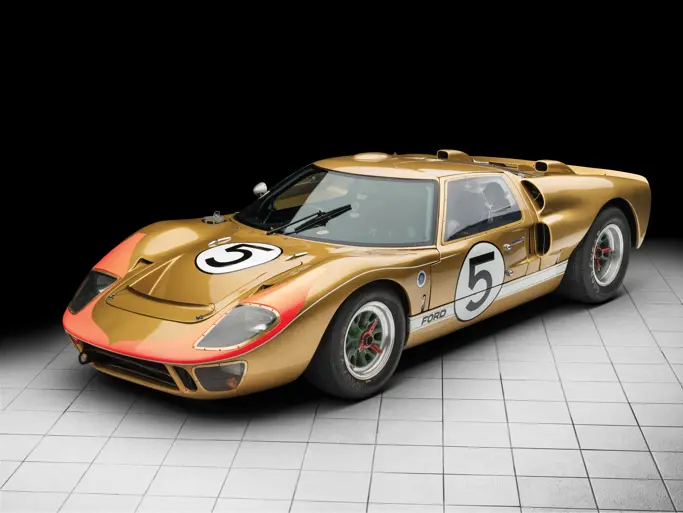
Ford GT40 Mk II chassis P/1016 is one of only eight examples completed to Mk II specification, built for the Holman-Moody factory team's 1966 Le Mans campaign. Originally despatched by Ford Advanced Vehicles in September 1965 and finished at Shelby-American in California, the car raced at Daytona and Sebring before competing at Le Mans in the pivotal 1966 Ford versus Ferrari contest. Finished in Kandy Gold, it is believed to be the sole GT40 Mk II ever to have run with the experimental PowerShift automatic transaxle.
Ownership
- —Auction saleSold US$9,795,000
- 1965-09-11 → 1966Factory deliveryFord Advanced Vehiclesfull documentation
Chassis dispatched from Ford Advanced Vehicles in September 1965 and subsequently shipped to Shelby-American for completion.
- 1966 → 1966Acquisition unknownShelby-Americanfull documentation
Car completed at the Venice, California facility in January 1966 before being transferred to Holman-Moody.
- 1966 →Acquisition unknownHolman-Moodyfull documentation
Charlotte-based team received the car after the Sebring test and prepared it for the 1966 racing season, making significant mechanical upgrades throughout.
Competition
- 1966Le Mans 24 HoursDriver: Ronnie Bucknum
Car ran as #5, co-driven by Dick Hutcherson. Qualified 9th; ran as high as 3rd place during the event after recovering from early braking issues and a lengthy pit stop.
- 1966-02-05Daytona 24-Hour ContinentalDriver: Ronnie BucknumDNF — gearbox failure after 13 hours
Car ran as #87 fitted with an experimental two-speed automatic transaxle; co-driven by Richie Ginther. Retired due to problems with the experimental transmission.
- 1966-03-26Sebring 12 HoursDriver: Ronnie Bucknum12th place
Car ran as #4 in Kandy Gold livery with brake-cooling air intakes; co-driven by A.J. Foyt. Final outing with the experimental PowerShift transmission before conversion to a standard manual unit.
Maintenance & restoration
- 1966RestorationShelby-American
Final assembly completed at Shelby-American's Venice, California facility; car finished in white with a matte black hood.
- 1966MechanicalHolman-Moody
Following transfer to Holman-Moody, numerous Shelby-applied modifications were revised or upgraded; car fitted with heavy-duty dampers and springs, adjustable anti-roll bars, a right-hand torsion bar for banking compensation, and the experimental two-speed automatic transaxle ahead of Daytona.
Suspension setup drew on the team's extensive NASCAR experience with high-speed banked circuits.
- 1966MechanicalHolman-Moody
Following Daytona, the car was repainted Kandy Gold and fitted with brake-cooling snorkel intakes for Sebring; after that race the experimental PowerShift transaxle was removed and replaced with the standard T-44 manual unit in preparation for Le Mans.
The switch to the manual gearbox was considered definitive for endurance racing going forward.
- 1966MechanicalHolman-Moody
Further preparation for Le Mans included fitting standard front bodywork and modifying the driver's door with a helmet-clearance bulge.
Are you the owner of this car?
This car's public record is built from its auction and competition history. Register your ownership and privately add your own records to make it a verified Legacy Metrics passport — provenance that backs your car's value at sale and gives your insurer evidence to price against. Roy reviews and verifies every registration personally.