1962 Ferrari 250 GTO (Tipo 1962 coachwork, originally 4-liter / 330 LM specification)
- Engine
- 3.0L V12 Colombo short-block, currently fitted (engine no. 670/62E, 128LM/63 spec), originally raced with a near-4.0L V12 fed by six Weber 42 DCN carburetors (~390 bhp)
- Colour
- Chinese red ('Rosso Cina'), later refinished yellow ('giallo') before US export
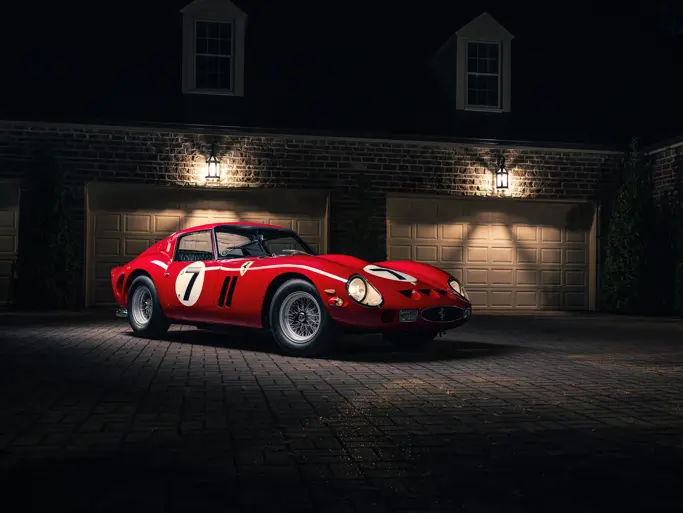
Chassis number 3765 is a 1962 Ferrari 250 GTO distinguished as the sole factory-built GTO originally fitted with a 4-liter engine, and the only Tipo 1962 GTO ever campaigned directly by Scuderia Ferrari. Prepared by Maranello's own engineers under the direction of Giotto Bizzarrini's aerodynamic programme, it debuted at the 1962 Nürburgring 1000 KM driven by Mike Parkes and Willy Mairesse, achieving a class win and second overall before being re-engined for Le Mans the same year. Its combination of unique factory provenance, documented build records, and consequential in-period race history places it among the most singular examples of the 36-car GTO production run.
Ownership
- —Auction saleSold US$51,705,000
- 1962 →Factory deliveryScuderia Ferrari (Works)full documentation
Factory-owned and campaigned works entry; build details supported by factory build sheet copies and a specialist history report. Car was prepared and raced directly by the Maranello factory team.
- 2026-05-20 →Private saleRoy Kingfull documentation
Competition
- 1962International Championship of Manufacturers1962 Le Mans 24 HoursDriver: Mike ParkesDNF — sand bank incident at race start
Co-driven by Graham Hill (Aston Martin context suggests Hill was a separate competitor); car carried race number 7 with the uprated six-carburetor 4-liter engine. Parkes locked up the brakes at Mulsanne on lap one and became beached in a sand trap, costing approximately 30 minutes before returning to the pits.
- 1962-05-27International Championship of Manufacturers1962 Nürburgring 1000 KMDriver: Mike Parkes1st in class, 2nd overall
Co-driven by Willy Mairesse; car carried race number 120 and was fitted with the experimental 4-liter three-carburetor engine, marking its competition debut.
Maintenance & restoration
- 1962Engine rebuildScuderia Ferrari
The original three-carburetor 4-liter engine was removed and replaced with a second unit (number 48 SA) breathing through six Weber 42 DCN carburetors, with estimated output around 390 horsepower, ahead of the Le Mans entry.
This second engine represented a substantial power increase over both the three-carburetor 4-liter unit and the standard 3-liter GTO specification.
- 1962BodyworkScuderia Ferrari
Minor nose modifications were carried out prior to Le Mans: the hood bulge was reshaped to suit the six-carburetor intake layout, unique driving lamps were added to the fender sides beneath the teardrop markers, and the previously blocked triangular cooling vents above the grille were reopened. Some alterations also addressed minor corner damage sustained at the Nürburgring.
- 1962Engine rebuildScuderia Ferrari
A 4-liter Colombo-architecture engine (number 42 SA), converted to dry-sump lubrication and fitted with special carburetors and camshafts, was tested and installed in preparation for the Nürburgring entry.
This three-carburetor unit was the first 4-liter powerplant fitted to a GTO; its installation is documented by factory build sheets.