1912 Stearns-Knight Toy Tonneau Runabout
- Engine
- 28 rated hp, 312.1 cu in sleeve-valve inline-four
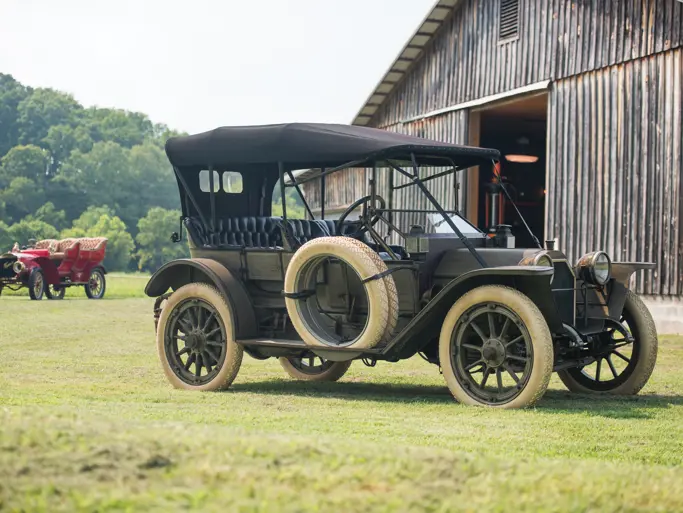
A 1912 F.B. Stearns Toy Tonneau Runabout, one of only two known survivors of its body style, powered by a sleeve-valve inline four-cylinder engine. Built by the pioneering Cleveland manufacturer that first adopted Knight sleeve-valve technology in the United States, the car entered the famous Barney Pollard Collection in Detroit in 1940 and remained there undisturbed until acquired by a New Jersey collector. It subsequently received a distinctive barn-find-style cosmetic treatment combined with a full mechanical restoration, preserving its largely original character while returning it to running condition.
Ownership
- —Auction saleSold US$115,500
- 1940 →Acquisition unknownBarney Pollard Collectionpartial documentation
Part of a massive Detroit-based collection of approximately 1,200 vehicles. The car remained undisturbed from acquisition until dispersal; an Ohio plate from 1940 found on the vehicle at the time of acquisition remains attached.
- → 2011Private saleMike Kalteneckerpartial documentation
Idaho-based owner who collaborated with Stearns specialist Art Aseltine to reverse minor historical alterations and return the vehicle to a complete, original configuration.
- 2011 →Private saleHarold Cokerpartial documentation
Commissioned a distinctive barn-find-style cosmetic treatment alongside full mechanical restoration by Paul Vaughan in Pennsylvania, preserving a patinated appearance while returning the car to running order.
- Date unknownAcquisition unknownBruce Reploglepartial documentation
New Jersey collector who obtained the car from the Pollard dispersal in unrestored condition, then passed it along without undertaking restoration.
Competition
- 2013AACA Museum Hershey Week DisplayExhibited
Shown at the AACA Museum in Hershey during the annual Hershey gathering, alongside a fully restored sister car from the Stearns family now in the museum's permanent holdings.
Maintenance & restoration
- —Bodywork
The car was repainted at some point during the 1920s, departing from its original factory finish.
Identified as a prior alteration when the car was later assessed for restoration.
- —Restoration
Working with Stearns authority Art Aseltine, owner Mike Kaltenecker reversed a small number of minor modifications to return the car to a complete and original specification.
Work was carried out while the car was in Idaho; no date is given.
- —RestorationPaul Vaughan
Restorer Paul Vaughan in Willow Street, Pennsylvania carried out a hybrid treatment: full mechanical restoration to running condition combined with a deliberate barn-find cosmetic finish developed through trial and error. New body wood was fitted, some metalwork was repaired, bent fenders were addressed, and tattered upholstery was replaced with new black leather in a patina-style finish. A new black canvas top was fitted and brightwork was left in a deliberately subdued, unpolished state.
Commissioned by Harold Coker following his 2011 acquisition. The objective was to preserve the car's aged appearance while ensuring full mechanical function, without pursuing a conventional show restoration.
Are you the owner of this car?
This car's public record is built from its auction and competition history. Register your ownership and privately add your own records to make it a verified Legacy Metrics passport — provenance that backs your car's value at sale and gives your insurer evidence to price against. Roy reviews and verifies every registration personally.